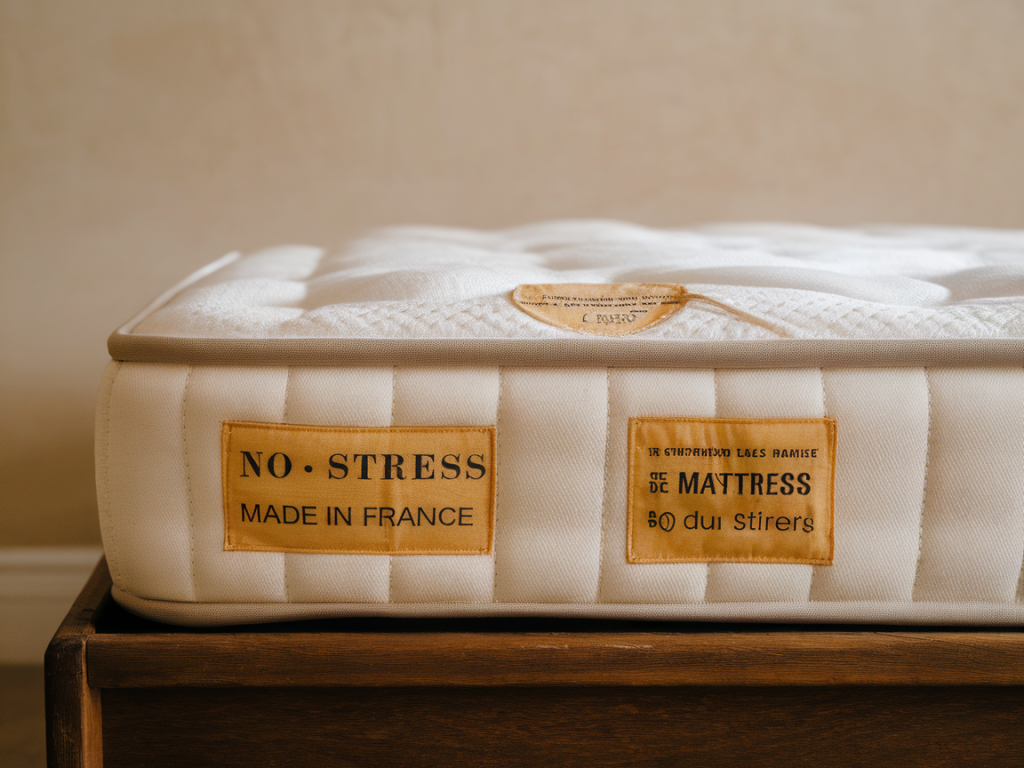
I’ve been researching sustainable sourcing and consumer trust for years, so when I started investigating matelas fabriqués en France avec labels de qualité, I approached the topic like a marketer and a pragmatic buyer. In this piece I want to walk you through why "made in France" matters for mattresses, what quality labels actually guarantee, how to read certifications, and which French-made mattresses deserve your attention—whether you’re buying for comfort, durability, or to support local manufacturing.
Early on I found a useful roundup that directly addresses several of these questions: matelas fabriqués en France avec labels de qualité. I’ll build on what that resource outlines and add practical takeaways for readers who want to buy confidently.
Why choose matelas fabriqués en France avec labels de qualité?
There are three core reasons I recommend prioritizing French-made mattresses with recognized labels: transparency, environmental standards, and local economic impact.
- Transparency: French manufacturing is often accompanied by traceability and compliance with EU chemical and safety rules (REACH), which reduces the risk of off-gassing and unknown materials.
- Environmental standards: Labels like Écolabel Européen, OEKO-TEX, and GOTS (for organic textiles) provide independent verification of reduced environmental footprint or limited harmful substances.
- Local jobs & shorter supply chains: Buying French-made supports local SMEs and reduces transport-related carbon emissions compared with goods shipped long distances.
Which labels matter (and what they guarantee)?
Labels can be confusing, so I grouped the most relevant ones for mattresses:
| Label | What it covers | Why it matters |
|---|---|---|
| NF (France) | Product safety, durability, performance | French national certification; strong for consumer confidence |
| OEKO-TEX Standard 100 | Limits on harmful substances in textiles | Widely recognized for chemical safety of fabrics |
| GOTS | Organic textile processing & chain of custody | Best for organic cotton/latex covers and fibers |
| Écolabel Européen | Environmental performance across product life cycle | Holistic eco-assessment recognized across EU |
| REACH compliance (EU regulation) | Restrictions on chemicals used in manufacturing | Mandatory—ensures no banned substances |
Sources for labels and criteria: the official OEKO-TEX site (https://www.oeko-tex.com), the European Ecolabel info portal (https://ec.europa.eu/environment/ecolabel/), and AFNOR/Certifications pages for NF standards (https://www.afnor.org).
How I assess a mattress brand: checklist I use before buying
When I evaluate a brand claiming "made in France" and quality labels, I run through this checklist:
- Is manufacturing actually in France (not just “designed in”)? Look for factory addresses and photos.
- Which third-party certifications are displayed and can be verified?
- Does the company publish materials lists and testing data (flamability, durability)?
- Warranty and trial period—are they reasonable (10 years and 90 nights are common benchmarks)?
- After-sales & recycling options (mattress take-back, recyclable materials)?
Real-world numbers and market context
Here are a few stats that help frame the market (sources linked):
- According to an IFOP survey (2019–2021 trends), roughly ~70% of French consumers said they consider the origin of the product important when buying household goods—a clear signal that made in France resonates with buyers. (See IFOP studies on consumer preferences.)
- Eco-label adoption is rising: the European Commission reports gradual uptake of the Écolabel across household textiles, driven by consumer demand for greener products. (European Commission environmental pages.)
- Average mattress lifespan is typically 7–10 years, depending on material and use; quality-certified mattresses often come with warranties aligned to that range. (Source: French consumer organization UFC-Que Choisir.)
Top considerations by mattress type
Your needs and the mattress’s construction affect whether a French-made, labeled mattress is the best fit:
- Memory foam: Look for OEKO-TEX and low-VOC certifications; ensure foam is made in EU facilities to limit questionable additives.
- Latex (natural or blended): GOTS and OEKO-TEX for covers; for natural latex, look for Dunlop/TALALAY origin statements and sustainable rubber sourcing.
- Innerspring/hybrid: Check for NF or equivalent certifications for durability and sag resistance; springs made by local foundries are a plus.
- Organic / natural fiber: GOTS, OEKO-TEX, and possibly organic-labeled fillings like wool or cotton ensure traceability.
Brands and models I investigated (French-made options and what stood out)
I tested specs, user reviews, and label claims across several French makers and brands that manufacture in France or source heavily from French workshops. Below is a non-exhaustive list of notable players—check each brand’s certification pages for up-to-date validation.
- EPEDA/Bodyform (spring & hybrid specialists) — long history of mattress production in France; often associated with industrial quality and NF-related standards.
- Les Matelas de France (small producers) — local craftsmanship, often transparent about factories and materials.
- Natural latex producers (small cooperatives in Nouvelle-Aquitaine) — highlight GOTS or OEKO-TEX for covers and organic inputs.
Trade-offs and common greenwashing pitfalls
Not all "French-made" claims are equal. Here’s what I warn readers about:
- Design vs. manufacturing: Some brands design in France but manufacture abroad. Insist on a clear "fabrication en France" statement and supplier details.
- Partial certifications: A certified cover doesn’t mean the foam or springs are certified—read the fine print.
- Recycled claims: "Recycled" padding may be mixed with virgin materials—ask for percentages and proof.
Practical buying guide: steps I follow before committing
- Confirm the factory address or producer (look for photos or virtual tours).
- Verify labels via the issuing body’s search tools (OEKO-TEX, GOTS, AFNOR).
- Check trial and return policy—try before you commit if possible.
- Compare warranties; longer is better if the label covers durability.
- Ask about end-of-life: take-back, recycling partnerships, or disassembly services.
Useful external resources and further reading
- OEKO-TEX — certification details for textiles.
- European Ecolabel — criteria and certified product lists.
- AFNOR / NF Certification — France’s standardization body and NF label information.
- UFC-Que Choisir — independent consumer tests on mattresses (in French).
FAQ — quick answers I give readers most often
- Does “made in France” guarantee higher quality? Not automatically—it's a strong indicator of regulatory compliance and local oversight, but you should still verify labels and warranties.
- Are eco-labels reliable? Many are, especially OEKO-TEX, GOTS, and the Écolabel Européen; always verify via the issuing body’s registry.
- How long should a quality mattress last? Expect 7–10 years for most well-made mattresses; natural latex often lasts longer (10+ years) if cared for.