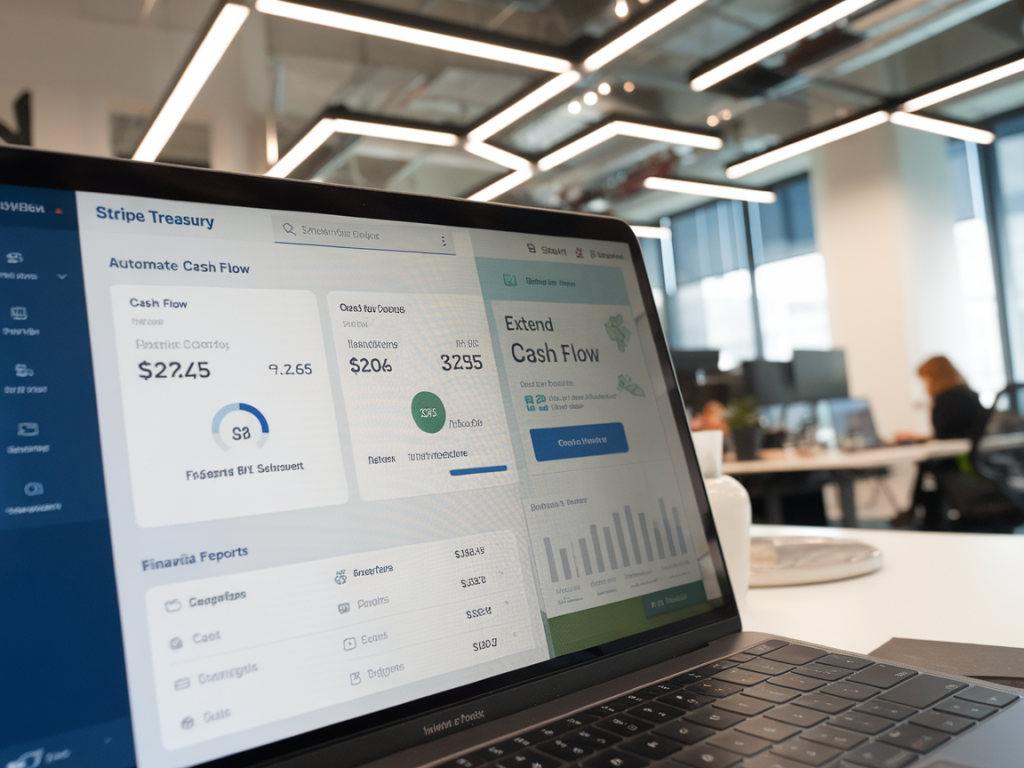
When I first dug into Stripe Treasury, I was drawn not because it was shiny new tech, but because it promised something every founder obsesses over: more runway. For early-stage startups the simplest way to stay in the game is to make every dollar work harder and get predictable timing on cash. Stripe Treasury offers banking primitives embedded into your product — accounts, payouts, controlled transfers — and when used thoughtfully they can meaningfully reduce cash friction, automate routine flows, and buy you time to hit the next milestone.
What is Stripe Treasury and why it matters for startups
At its core, Stripe Treasury is an API-driven set of banking services that lets you create and manage bank-like accounts, move funds, and control disbursements programmatically. It partners with regulated banks (such as Evolve Bank & Trust in the US) to provide FDIC-backed-like accounts and rails while you interact through Stripe’s developer-friendly API.
For startups, that matters for three reasons:
Speed: It avoids the slow back-and-forth of building banking relationships and integrations from scratch.Control: You can programmatically decide when and how money gets paid out, held, or swept.Visibility: The API and dashboards give real-time clarity on balances and flows — essential when runway planning is tight.How automating cash flow extends runway
I see runway extension come from three practical improvements:
Reducing float and idle balances: Automated sweeps move excess cash into interest-generating or safer buckets, rather than letting it languish in unproductive places.Preventing surprise outflows: Programmatic controls and spend rules prevent accidental large payouts or fraud, keeping funds available for payroll and critical operations.Optimizing timing: By automating streaks like invoicing receipts, scheduled vendor payments, and customer refunds, you smooth the cash curve and avoid unnecessary short-term financing.Concrete automations you can build with Treasury
Here are patterns I recommend implementing early:
Customer receipts -> Vault -> Operating account: Route incoming payments to a controlled ledger or “vault” to enable verification, then sweep to your operating account once checks clear.Priority-based disbursement: Create business rules that prioritize payroll and vendor payments over discretionary spend, and enforce them via API checks before issuing payouts.Automated refunds and reserves: Maintain a dynamic reserve percentage from new revenue to cover expected refunds or chargebacks. Adjust that percentage based on historical rates and seasonality.Interest harvesting: Sweep excess daily balances into interest-bearing accounts or short-term instruments where supported, increasing net yield on idle cash.Scheduled microloans or lines: Some startups build internal advance products (customer refunds, commission advances) programmatically; Treasury provides the rails to hold and release those funds safely.Step-by-step: how I implemented Treasury for an early-stage product
When I tested this with a SaaS startup, I followed a deliberate sequence that reduced risk and led to early wins:
Identify critical flows: Payroll, refunds, top-line revenue, and vendor payments.Start small: I created a secondary “reserve” account via Stripe Treasury and routed 5–10% of receipts there automatically.Build visibility: Use Stripe webhooks to feed a simple dashboard showing available balances, pending holds, and scheduled disbursements.Automate one decision: I automated vendor payments to only proceed if the operating account balance exceeded a payroll buffer. This prevented accidental overdrafts during slow months.Iterate and expand: After validating the reserve strategy for two cycles, I increased the sweep frequency and adopted an interest-driving sweep into a higher-yield account.Costs, compliance and trade-offs
Stripe Treasury is not free and it doesn’t replace all banking needs. You’ll encounter:
Transaction and account fees: Moving money, issuing payouts, and holding balances often incur per-item or percentage fees.Regulatory requirements: KYC/AML checks are required and can add friction for onboarded customers or accounts you create.Vendor lock-in risk: Your flows become dependent on Stripe’s API semantics; consider portability strategies.Despite these trade-offs, the operational gains are often worth it, particularly when the alternative is manual reconciliation, delayed payouts or tight funding rounds. Always model the fees against the runway impact of avoided overdrafts, reduced interest costs on short-term credit, or delayed fundraising.
Key metrics to track
To know if Treasury automation really extends your runway, monitor:
Days Cash on Hand (DCOH): How many days your current balances cover operating burn after automations.Float Reduction: Average time cash sat idle before and after sweeps.Reserve Utilization Rate: How often and how much of your automated reserve gets used to cover refunds or chargebacks.Failed Payouts and Overdraft Incidents: Any reductions in payment failures after enforcing programmatic checks.Common questions founders ask
Below are questions I get frequently and how I answer them:
Will Treasury replace our bank? No. It complements your banking relationship by offering programmable controls and embedded accounts. Keep a primary bank for legacy services and credit facilities.Is KYC painful? Some of it is unavoidable. Design onboarding flows with good UX and clear explanations about identity verification to reduce drop-off.How quickly can I see impact? Small automations (reserve sweeps, payout guards) can show measurable runway improvement within a month. Larger architecture changes (interest optimization) may take a quarter. | Manual Cash Management | Automated with Stripe Treasury |
| Slow reconciliation (days) | Near real-time visibility |
| Higher risk of missed payroll | Payouts gated by business rules |
| Idle balances unproductive | Automated sweeps to interest-bearing buckets |
Best practices before you jump in
From my experiments and conversations with founders, follow these rules of thumb:
Prototype first: Run automations in a sandbox environment and with low dollar volumes before scaling.Keep human override: Always add an emergency manual override path for critical payments like payroll.Monitor alerts: Set threshold alerts for anomalous outflows or failed sweeps so you can act fast.Model economics: Run a simple ROI model comparing Treasury fees to savings from reduced credit usage or fewer overdrafts.If you want examples or a sample webhook-to-dashboard workflow that I used to demonstrate impact to our CFO, I can share code snippets and a checklist for rollout. My goal is to make cash predictable — because when cash is predictable, runway feels a lot longer.