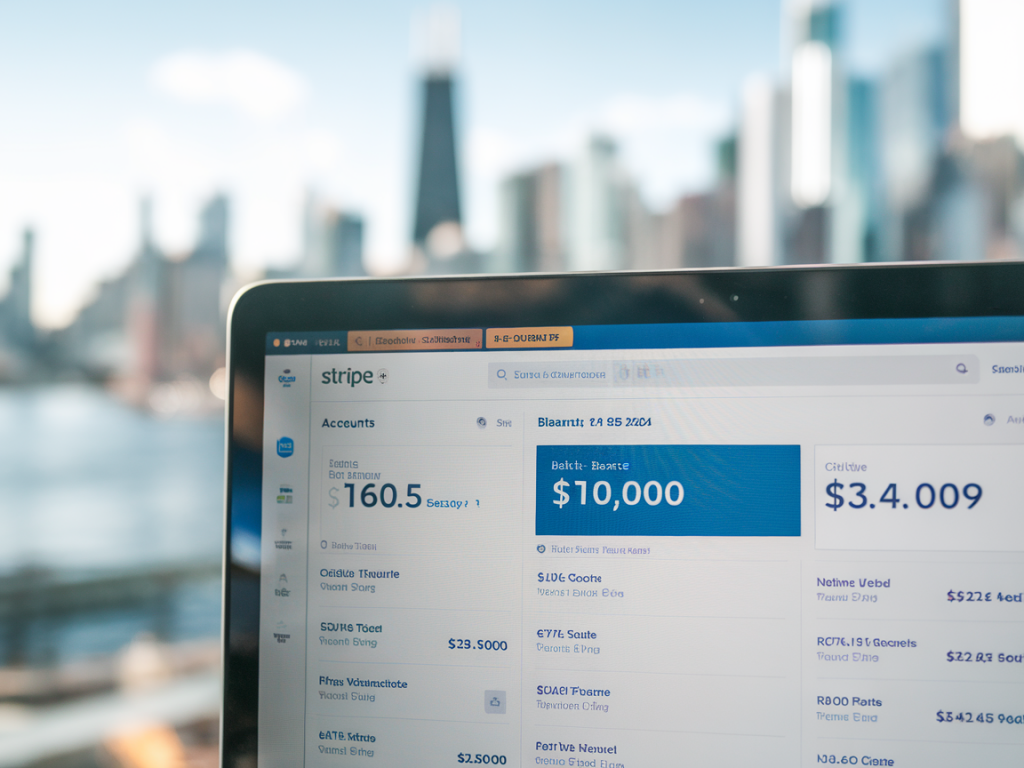
I remember the first time I realized banking overhead was quietly eating our runway. As a founder, every pound saved on fees and every hour reclaimed from manual reconciliation felt like oxygen for growth. That’s why when I started experimenting with Stripe Treasury for our startup’s cash operations, I was excited — and cautious. In this article I’ll walk you through how I used Stripe Treasury to automate cash flow, reduce banking fees, and build a more resilient finance stack. I’ll share practical steps, pitfalls, and ideas you can adapt to your business.
What is Stripe Treasury and why it matters for startups
Stripe Treasury is a programmable financial account product that lets platforms embed bank-like services directly into their apps. In plain terms, it gives you the ability to create accounts, hold funds, move money, and integrate payments and transfers — all through Stripe’s APIs and partner banks.
For startups, that means you can reduce dependency on multiple external banks, cut down on manual transfers, automate sweeps, and centralize cash management. Instead of juggling several bank portals, CSV exports, and reconciliation scripts, you can orchestrate cash behavior from code — which is a massive productivity and cost win.
How I evaluated whether Stripe Treasury was right for us
Before integrating anything, I mapped out the problems I wanted to solve:
- High and opaque banking fees from frequent transfers and foreign payments.
- Time-consuming reconciliation across payment processors and bank accounts.
- Cash stuck in transit causing delayed payouts to suppliers or team members.
- Need for programmatic control over when funds move, so we could implement automated sweeps and reserves.
With those criteria, Stripe Treasury ticked many boxes: built-in custody and bank partners, rich APIs, native integration with Stripe Payments, and the ability to create sub-accounts or programmatic account objects for customers and vendors.
Practical steps I took to implement Stripe Treasury
Here’s the sequence I followed to move from concept to production. I framed it as small, testable experiments rather than a big-bang migration.
- Sandbox experimentation: I started in Stripe’s sandbox to create test Treasury accounts, simulate deposits, and practice transfers. This revealed key API behaviors and documented error cases.
- Designing the cash architecture: I defined account roles — e.g., operational account, reserve account, customer escrow accounts, and payroll disbursement pool. Each role had rules for allowed in/outflows and reserve thresholds.
- Integrate with existing payments: Because we already used Stripe Payments, hooking Treasury to our payment flows was straightforward. Funds from card charges and ACH could be routed into Treasury balances programmatically.
- Automated sweeps and rules: I implemented rules that moved excess cash from operational accounts into interest-bearing or reserve accounts nightly, keeping a cushion for upcoming payroll or vendor payments.
- Reconciliation and reporting: I built a reconciliation service that matched Stripe payment events, Treasury activities, and our ledger entries — reconciling daily and flagging anomalies.
- Gradual cutover: I routed a percentage of new transactions to Treasury and monitored for 30–60 days, then increased traffic as confidence grew.
Key features I used and how they saved us money
- Programmable accounts: Creating individual cash accounts for vendors and customers reduced the need for external sub-bank accounts and avoided multiple account maintenance fees.
- Internal transfers: Moving money between Treasury accounts avoided interbank transfer fees and reduced settlement times compared with ACH between banks.
- Integrated payouts: When we needed to pay contractors or suppliers, programmatic payouts reduced manual bank transfers and wire fees.
- Holding vs. Payout timing control: Being able to schedule payouts based on cash flow forecasts reduced unnecessary float and avoided overdraft or urgent transfer fees.
- Reduced FX and conversion fees: If your platform handles multiple currencies, local collection and regional Treasury flows cut down expensive cross-border banking fees.
Typical automation patterns I implemented
- Nightly sweep: Move balances above a safety threshold into a reserve or interest-bearing account.
- Payout scheduling: Queue vendor or payroll payments and release them only after certain events — e.g., invoice approvals or completion confirmations.
- Dynamic reserve sizing: Adjust the cash cushion based on upcoming obligations (payroll dates, expected refunds) and historic burn rate.
- Auto-reconciliation triggers: When a payment settles in Treasury, automatically generate ledger entries and close matching invoices.
- Alerting and remediation: If a transfer fails, route alerts to finance Slack channel and run automated retries or fallback to another funding source.
Security, compliance, and operational considerations
Stripe Treasury operates through partner banks and Stripe’s infrastructure, which covers a lot of the heavy regulatory lifting. Still, I kept a close eye on:
- Customer verification (KYC): For any accounts that hold customer funds, ensure you meet KYC/AML requirements — Stripe provides tools but you still need workflows and record-keeping.
- Account ownership and legal agreements: Clarify whether funds are custodial or part of your operating accounts, and document agreements with customers and vendors accordingly.
- Operational runbooks: Create procedures for transfer failures, disputes, refunds, and escalation paths with Stripe and partner banks.
- Data retention and audit trails: Keep detailed logs of API calls, transfers, and reconciliations to support audits and tax reporting.
Costs: how Stripe Treasury compares to traditional banking
Fees vary by use case and region, but here’s a simple comparison I used internally to estimate savings. Replace these sample numbers with your negotiated rates.
| Action | Traditional bank (sample) | Stripe Treasury (sample) |
|---|---|---|
| Domestic ACH | £0.20–0.50 per transfer | Often similar or lower when internalized |
| Wire transfer | £10–30 per wire | Programmatic payouts reduce wire usage; fees vary |
| Account maintenance | Monthly fees for multiple accounts | Consolidated via Treasury, often lower operational cost |
| FX / cross-border | 1%–3% + spread | Lower when regional flows handled within Stripe network |
I tracked our monthly transfer volume and replaced several high-cost wires with in-platform transfers and scheduled payouts. The direct savings were meaningful, and the hidden savings — reduced staff time on bank reconciliation — were just as important.
Common pitfalls and how to avoid them
- Over-centralization risk: Don’t concentrate all cash in a single account without contingency. Keep operational redundancy and clear access controls.
- Insufficient monitoring: Automated flows need robust monitoring — I set up alerts for failed transfers, balance dips, and unusual activity.
- Assuming instant settlement: Some transfers still take time. Align your cash buffers and payout schedules with real settlement timelines.
- Regulatory mismatch: If you operate internationally, check local regulations for holding customer funds — sometimes local licensing is required.
How to start today (a quick checklist)
- Create a Stripe account and enable Treasury in sandbox mode.
- Map your cash architecture: define account roles and flow rules.
- Build small experiments: route a slice of transactions to Treasury and test sweeps and payouts.
- Automate reconciliation: match Stripe events to ledger entries nightly.
- Monitor and iterate: add alerts, adjust thresholds, and expand coverage over weeks.
If you treat Treasury as a programmable extension of your finance team, not just another product, it becomes a lever for efficiency and control. For startups looking to stretch runway and automate tedious banking tasks, it’s worth exploring. I learned that the biggest gains come from combining product design (how money flows in your app) with solid automation and operational discipline — and that’s where Stripe Treasury really shines.