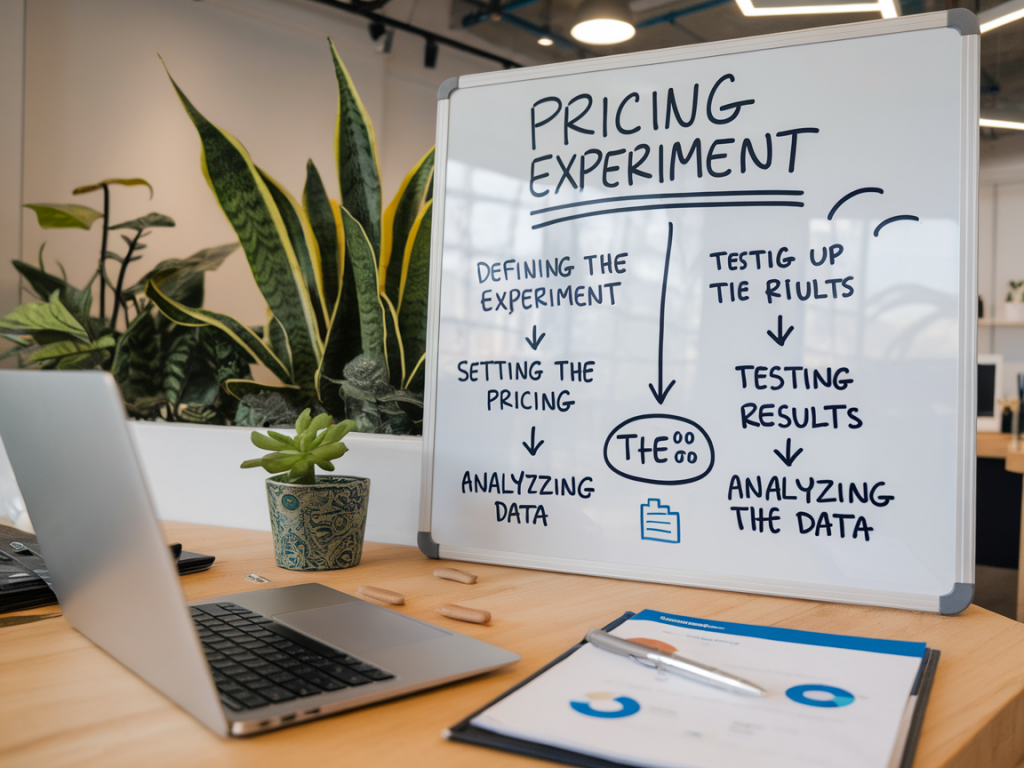
I recently ran a 30-day pricing experiment to test a bold hypothesis: customers would willingly pay 30% more for a specific SaaS feature. I want to walk you through exactly how I set it up, what I measured, and the practical lessons that came out of it so you can run your own experiment with confidence. This is hands-on, no-nonsense guidance based on real experience—what I did, what worked, and where I would refine things next time.
Why test a 30% increase for a single feature?
Price is one of the easiest levers to tweak, but it’s also the one with the most risk. Rather than raise the entire subscription price (which can trigger churn), we focused on a single, high-value feature that users repeatedly asked for and that notably reduced friction for power users. My goal was to isolate willingness to pay for that feature without disrupting baseline subscription revenue.
Define the hypothesis and success metrics
Before any code changes, I wrote a crisp hypothesis: Users who are heavy users of Feature X will still convert at least 60% of the baseline purchase rate when the price is increased by 30%. I chose 60% because even with a reduction in conversion, the higher ARPU would still increase revenue if the drop wasn’t too steep.
Primary metrics I tracked:
Segment your audience deliberately
Segmentation is essential. I didn’t show the new price to everyone. I used three segments:
Targeting power users reduces false negatives—the people most likely to pay are the ones who’ll reveal true willingness to pay.
Design the experiment
I ran a parallel A/B test with equal-sized groups for the target segments. The variants were:
Key design considerations I implemented:
Craft the right messaging
Price reactions are strongly influenced by how you present the change. I used three messaging tactics concurrently:
Example in-app CTA copy: “Unlock prioritized exports—cut reporting time from hours to minutes. Add Feature X for $12/month (was $9)”.
Implementation checklist
Here’s the minimal technical stack I used:
Daily hygiene and monitoring
Every day I checked:
I set automated alerts for abnormal churn spikes and a daily digest with key KPIs so I didn’t need to stare at dashboards all day.
Example results table
| Metric | Control (Baseline) | Variant (+30%) | Result |
|---|---|---|---|
| Conversion rate to feature | 12% | 9% | -25% relative |
| AOV for feature | $10 | $13 | +30% nominal |
| ARPU (overall) | $22 | $24 | +9% overall |
| Churn (30-day) | 3.2% | 3.5% | +0.3pp (monitor) |
Interpretation and statistical confidence
Even if conversion dropped, revenue per active user rose enough to justify the price bump in the short term. But you must test statistical significance: I calculated confidence intervals on conversions and revenue uplift and used a two-proportion z-test for conversion changes. If you’re not comfortable with stats, use an A/B testing tool that reports significance automatically.
Be wary of short-term wins due to selection bias or novelty. A 30-day window is often enough to detect clear signals, but I always run a follow-up cohorted analysis at 60 and 90 days to check for delayed churn or regression.
Lessons I learned
Next steps to scale the result
If the experiment shows a sustainable uplift, I recommend:
Running a focused 30-day experiment like this is one of the most efficient ways to discover hidden value in your product without risking your entire customer base. It forces you to tighten messaging, measure rigorously, and put customer value at the center of pricing decisions. If you want, I can share a starter spreadsheet template for segmentation, metrics, and power calculations to help you plan your own experiment—just ask.